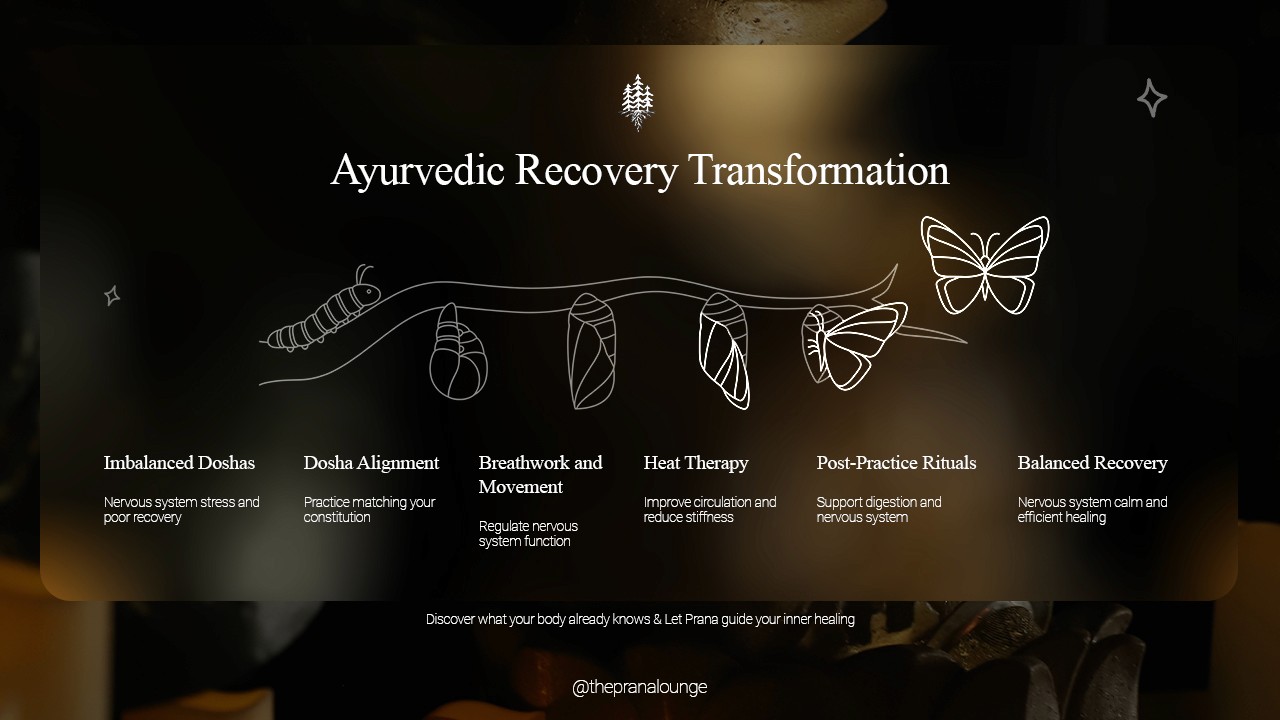
In every era, cultures have searched for ways to heal. Some turned to herbs. Some turned to breath. Some turned to movement. But long before wearables, stress trackers, and HRV monitors, Ayurveda already mapped the inner workings of the human body through the language of elements and doshas.
Today, modern physiology is beginning to validate what these ancient frameworks described in metaphor. Science has new vocabulary. The principles are timeless.
This is where Ayurveda meets recovery science. This is where intuition meets data. This is where you begin to understand your body as its own pharmacy.
The Dosha System in Modern Biology
Ayurveda describes three constitutional types: Vata, Pitta, and Kapha. Traditionally these represent patterns of energy, digestion, mood, and movement. Modern research draws striking parallels.
Vata: The air and space element
Vata reflects sensitive digestion, rapid thoughts, irregular breathing, and quicker stress reactivity. Modern neuroscience describes this as heightened sympathetic arousal and lower parasympathetic tone. Research from the University of California Berkeley shows that people with high sympathetic responsiveness experience more rapid changes in heart rate and cortisol during stress.
Pitta: The fire and water element
Pitta corresponds to strong metabolism, intense focus, and a tendency toward inflammation when stressed. Studies on inflammation pathways show that individuals with higher metabolic heat and digestive fire often show elevated markers of IL-6 and TNF-alpha during emotional stressors. Harvard Medical School confirms that stress increases inflammatory cytokines in certain metabolic profiles.
Kapha: The earth and water element
Kapha represents calm, slower digestion, fluid retention, and emotional steadiness. In modern terms, this maps onto lower metabolic rate, steadier heart rate variability, and stronger parasympathetic dominance. Research in the journal Physiology & Behavior notes that individuals with naturally higher parasympathetic tone show more stable emotional regulation.
Ayurveda was not guessing. It was observing patterns that modern labs are only now quantifying.
Why Aligning With Your Element Improves Recovery
Your dosha influences how your nervous system responds to stress and how your muscles recover. When your practice matches your constitution, recovery accelerates. When it fights against it, the body resists.
For Vata types
Slow, warm, rhythmic movement improves vagal tone. Studies in Frontiers in Neuroscience show that controlled breath and slow movement significantly activate the parasympathetic nervous system, correcting Vata’s irregular stress response.
For Pitta types
Cooling breathwork and moderate pacing reduce inflammatory load. Research in Journal of Clinical Psychopharmacology shows that practices like Sheetali and Nadi Shodhana decrease cortisol and support emotional regulation.
For Kapha types
More dynamic movement increases metabolic flexibility. A randomized controlled trial in Evidence-Based Complementary and Alternative Medicine found that moderate intensity yoga improves aerobic capacity and metabolic markers in slower nervous system profiles.
Ayurveda framed this through elements. Science frames it through nervous system biology. They are two languages describing one experience.
Breathwork and Movement as Energetic Balancing Tools
In Ayurveda, breath is prana. In modern physiology, breath is the strongest regulator of autonomic nervous system function.
Slow diaphragmatic breathing increases vagal activity, as proven in multiple studies including a 2018 review in Frontiers in Psychology. Alternate Nostril Breathing (Nadi Shodhana) balances hemispheric activity, confirmed by EEG scans published in International Journal of Yoga.
Movement has its own energetic signature. Flow-based movement improves interoception. Stillness-based movement improves awareness of tension. Strength-focused movement improves insulin sensitivity and metabolic repair.
You are not simply stretching. You are influencing hormonal rhythm, cellular activity, and autonomic balance.
Why Heat Matters: Ama and Inflammation
Ayurveda describes Ama as stagnation, heaviness, and residue of incomplete digestion. Science describes similar states as metabolic stiffness, poor circulation, and low-grade inflammation.
Infrared warmth used in Prana Lounge practices has documented physiological effects. Studies in The Journal of Physiological Anthropology show that far-infrared heat improves microcirculation and reduces muscle stiffness. Research from Cleveland Clinic confirms that heat exposure increases blood flow, accelerates recovery, and reduces perception of pain.
Ancient healers said heat melts stagnation. Modern research says heat increases vasodilation and mitochondrial repair. Both are true.
Simple Ayurvedic Rituals That Enhance Class Benefits
After practice, your inner pharmacy is open. Recovery switches are on. These simple rituals extend that window.
• Sip warm water to support digestion and hydration
• Stay covered or warm to prevent Vata aggravation
• Eat light, nourishing foods to stabilise blood sugar
• Sit for a quiet minute to consolidate nervous system shifts
• Use gentle scents like eucalyptus or sandalwood to support grounding
• Sleep early to support nocturnal repair cycles
• Take five slow breaths before bed to deepen parasympathetic tone
These rituals work because they respect how the nervous system resets. Ayurveda called it aligning with nature. Science calls it circadian regulation.
Where Ancient Wisdom Meets Modern Recovery Science
At The Prana Lounge these two traditions meet. Ayurveda offers the map. Science provides the measurements. Your body provides the truth.
You learn your element.
You learn your biology.
You learn how to recover in a way that feels personal and precise.
Your body has always known how to heal. You are simply learning the language again.
✨ Ready to reset? Book your class today.
📍 658 Homer Street (Vancouver)