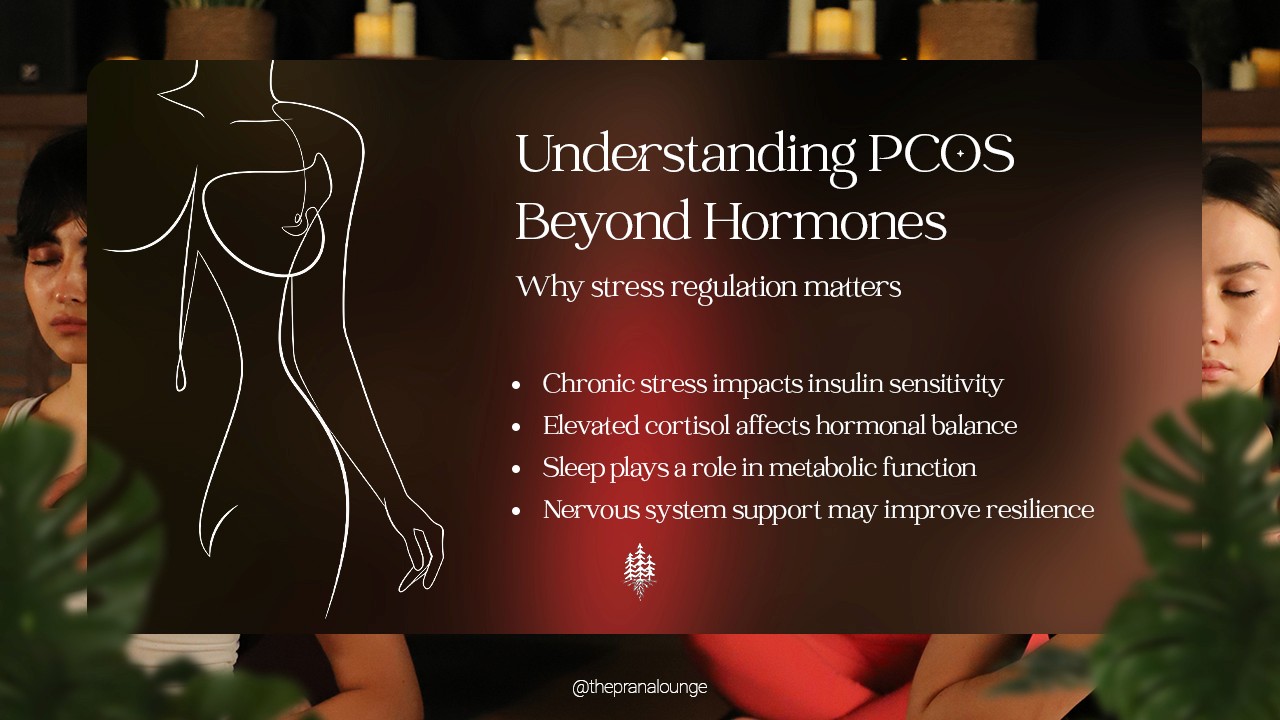
Polycystic Ovary Syndrome, commonly known as PCOS, is often described as a hormonal disorder. And it is. But hormones do not function in isolation. They are deeply influenced by metabolism, sleep, inflammation, and the nervous system.
Understanding PCOS fully requires looking beyond reproductive hormones alone and examining how stress physiology interacts with metabolic and endocrine systems.
What Is PCOS?
PCOS is one of the most common endocrine conditions affecting women of reproductive age. It is typically characterized by irregular ovulation, elevated androgen levels, and polycystic ovarian morphology. Many women with PCOS also experience symptoms such as irregular cycles, acne, hair changes, and difficulty with weight regulation.
Research shows that insulin resistance is present in a significant proportion of women with PCOS, regardless of body weight. Insulin resistance means the body’s cells do not respond effectively to insulin, leading to higher circulating insulin levels. Elevated insulin can stimulate androgen production in the ovaries, contributing to hormonal imbalance.
PCOS is complex and multifactorial. Genetics, metabolic factors, inflammation, and environmental influences all play a role.
The Link Between Stress and Insulin Resistance
Chronic stress activates the hypothalamic-pituitary-adrenal axis, increasing the release of cortisol. Cortisol is essential for survival. It helps regulate blood sugar and supports the body during acute stress.
However, prolonged elevation of cortisol has been associated with increased glucose production and reduced insulin sensitivity. When cortisol remains elevated for extended periods, it may contribute to metabolic strain.
Studies have observed that women with PCOS often exhibit altered stress responses and differences in cortisol regulation compared to women without PCOS. While stress alone does not cause PCOS, ongoing psychological stress may compound existing metabolic challenges.
In this context, stress regulation may support overall metabolic health alongside appropriate medical care.
Chronic Cortisol and Hormonal Balance
Hormonal systems are interconnected. The reproductive axis and the stress axis communicate constantly. When stress signaling remains elevated, it can influence ovulatory function and reproductive hormone patterns.
Research suggests that chronic activation of the stress response may affect gonadotropin-releasing hormone secretion, which plays a role in ovulation. Additionally, elevated cortisol may interact with insulin and androgen pathways, indirectly influencing symptom expression.
It is important to be clear: stress management does not replace medical treatment for PCOS. However, supporting nervous system regulation may complement broader care plans by reducing total physiological strain.
Why Sleep and Nervous System Regulation Matter
Sleep plays a critical role in metabolic and hormonal regulation. Short sleep duration and poor sleep quality have been associated with reduced insulin sensitivity and increased inflammatory markers. Women with PCOS are also more likely to experience sleep disturbances, including higher rates of obstructive sleep apnea.
When sleep is disrupted, cortisol rhythms can become irregular. This may further affect appetite regulation, energy levels, and glucose metabolism.
Nervous system regulation practices that improve relaxation and sleep quality may therefore support overall wellbeing. Improving sleep hygiene, reducing evening stimulation, and engaging in calming practices can help stabilize daily stress rhythms.
How Yoga May Support Stress Reduction
Yoga is not a cure for PCOS, nor is it a substitute for medical care. However, research has shown that yoga-based interventions may reduce perceived stress, improve autonomic balance, and lower markers of sympathetic nervous system activation.
Some small clinical studies have observed improvements in metabolic markers and androgen levels in women with PCOS who participated in structured yoga programs alongside conventional treatment. While more large-scale research is needed, these findings suggest that mind-body practices may support stress regulation.
Breath-focused movement and restorative practices can help activate the parasympathetic nervous system, the branch associated with rest and repair. When the parasympathetic system is engaged regularly, stress responses may become more balanced.
For women managing PCOS, incorporating yoga or other relaxation-based practices alongside medical treatment may help regulate stress physiology. The key phrase is alongside medical care.
A Broader Perspective on PCOS
PCOS is not only about ovarian hormones. It involves metabolic health, stress physiology, sleep quality, and systemic regulation. Addressing only one pathway often overlooks the interconnected nature of the condition.
Supporting the nervous system does not replace endocrinology or gynecology. But reducing chronic stress load, improving sleep, and encouraging balanced movement may create a more supportive internal environment.
When the nervous system is calmer, metabolic and hormonal systems may function more efficiently.
Supporting the nervous system can support overall wellbeing.
✨ Ready to reset? Book your class today.