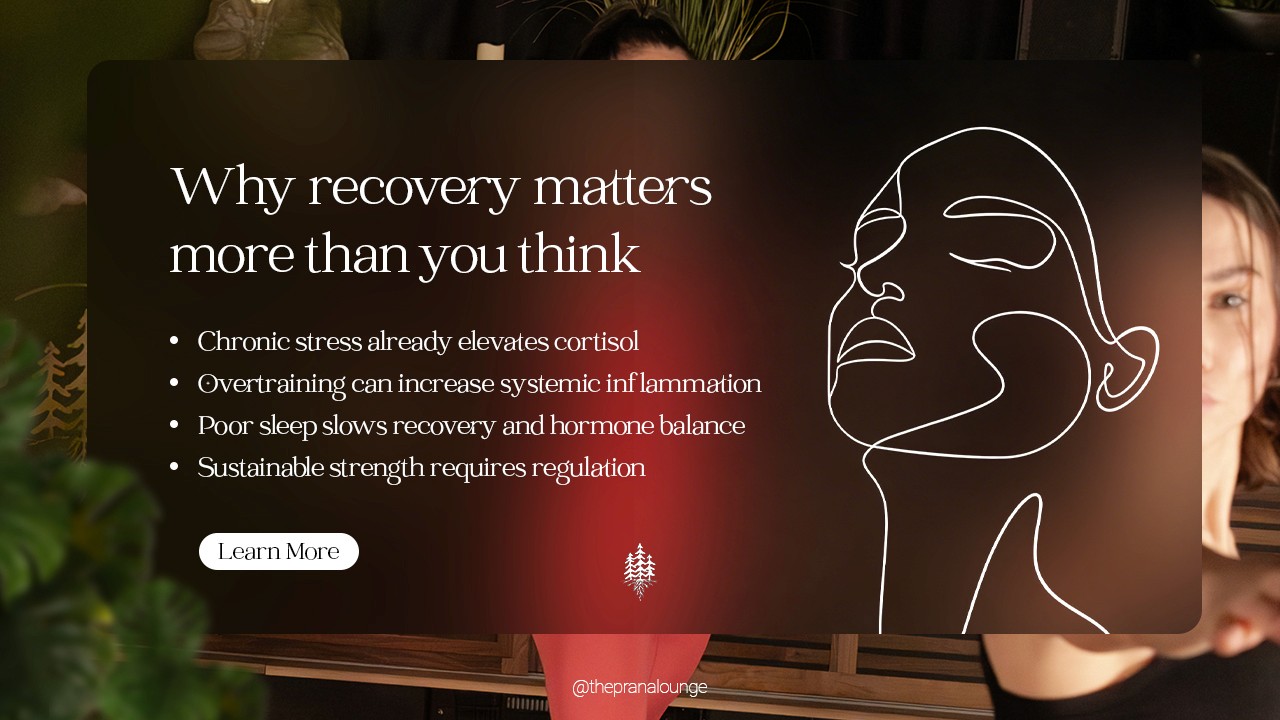
We often measure progress by effort. Longer sessions, heavier weights, higher heart rates. The more exhausted we feel at the end of a workout, the more productive it seems. But the body does not measure progress by exhaustion. It measures how well it can adapt afterward. And adaptation only happens when recovery is present.
Understanding Cortisol and Chronic Stress
Cortisol is a natural hormone that helps the body respond to stress. In healthy amounts, it supports energy, alertness, and performance. A temporary rise in cortisol during exercise is normal and beneficial. The concern begins when stress becomes constant.
Modern life keeps many women in a near-continuous state of activation. Work pressure, caregiving roles, emotional load, poor sleep, and social expectations all stimulate the stress response system. When this activation does not switch off, cortisol levels can remain elevated for extended periods. Prolonged stress has been associated with sleep disruption, increased inflammation, blood sugar instability, and slower recovery.
High-intensity exercise is also a physiological stressor. This does not make it harmful. In fact, when programmed appropriately, it improves cardiovascular health, muscular strength, and metabolic function. However, the body responds to total stress load, not just training stress. If daily life stress is already high, adding repeated high-intensity sessions without sufficient recovery can increase cumulative strain.
When Intensity Stops Driving Progress
High-intensity training is effective when followed by adequate recovery. Muscles rebuild. Hormones stabilize. The nervous system resets. This cycle of stress followed by repair is what produces resilience.
But when sleep is inconsistent, emotional stress is high, or recovery days are limited, frequent intense training may contribute to fatigue rather than growth. Overtraining without adequate recovery has been linked to hormonal disruption, mood changes, decreased performance, and persistent exhaustion.
This does not mean intensity should be avoided. It means context matters. Strength is built when effort is balanced with restoration.
Women’s Physiology and Stress Response
Women’s stress responses are influenced by hormonal fluctuations across the menstrual cycle. Estrogen and progesterone interact with the body’s stress system and can affect perceived effort, energy levels, and recovery patterns. Energy is not meant to remain identical every week.
Certain phases of the cycle may support higher intensity and power. Other phases may benefit from slower strength work or restorative movement. Ignoring these natural rhythms and training at maximum intensity continuously can increase strain rather than improve results.
Listening to the body is not a lack of discipline. It is physiological awareness.
The Role of the Parasympathetic Nervous System
The nervous system has two primary modes. One supports alertness and action. The other supports rest, digestion, and repair. Both are essential for sustainable strength.
High-intensity training activates the action mode. Recovery practices such as slow breathing, mobility work, and restorative yoga stimulate the repair mode. Research shows that breath-led and slower movement practices can improve autonomic balance and reduce perceived stress.
Recovery is not passive. It is a biological process that allows muscles to rebuild, inflammation to regulate, and hormones to recalibrate. Without it, adaptation slows and progress plateaus.
Sustainable Strength Requires Balance
Resistance training and cardiovascular exercise provide clear long-term health benefits for women, including improved bone density, metabolic health, and mobility. The question is not whether intensity has value. It does. The question is dosage and timing.
Sustainable training accounts for sleep quality, psychological stress load, nutritional intake, menstrual cycle phase, and structured rest days. When life stress is high, the intelligent choice may not be more intense. It may be slower strength work, breath-focused movement, or restorative sessions that support nervous system regulation.
Recovery is not quitting. It is intelligent training.
In a culture that celebrates exhaustion as commitment, choosing recovery can feel counterintuitive. Yet the physiology is clear. The body adapts best when stress is followed by restoration. Sometimes the strongest decision is not to push harder, but to create space for the body to repair, regulate, and return stronger.
✨ Ready to reset? Book your class today.