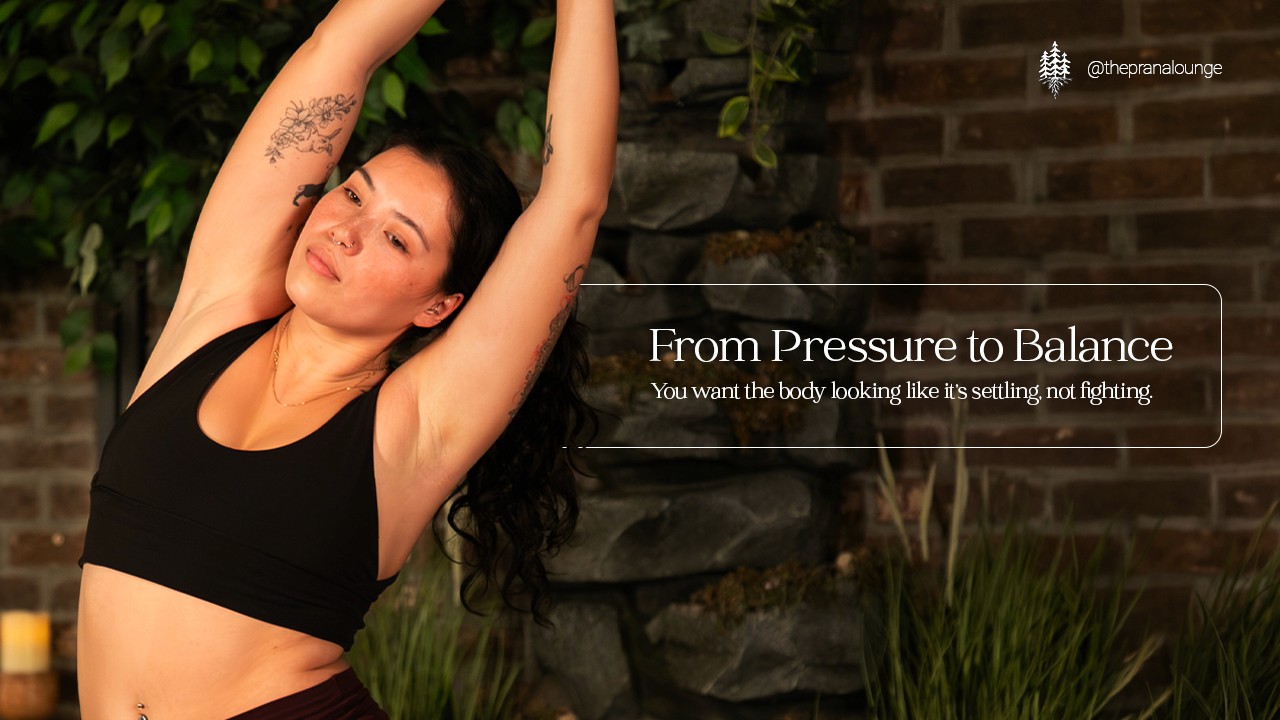
Fifteen minutes sounds small.
Too small, almost, to influence something as complex as blood pressure.
But the body does not always respond to intensity.
Sometimes, it responds to consistency.
And sometimes, what lowers pressure is not force, but regulation.
What Is Blood Pressure, Really?
Blood pressure reflects how hard your blood pushes against your artery walls.
When it stays elevated over time, it increases the risk of heart disease, stroke, and kidney issues. According to the World Health Organization, hypertension is one of the leading causes of premature death globally.
The key drivers are not just physical.
They include:
Chronic stress
Poor sleep
Sedentary lifestyle
Nervous system imbalance
This is where yoga enters the conversation.
Can 15 Minutes of Yoga Make a Difference?
Short answer: yes, when practiced consistently.
A study published in Journal of Hypertension found that regular yoga practice can significantly reduce both systolic and diastolic blood pressure.
Another systematic review in Mayo Clinic reports that slow breathing, relaxation, and gentle movement can lower blood pressure by improving autonomic regulation.
The keyword here is not duration.
It is repetition.
Fifteen minutes daily is often more effective than one long session once a week.
Why Yoga Works for Blood Pressure Regulation
Yoga does not “force” the body into change.
It creates the conditions for change.
Here is what happens physiologically:
1. Nervous System Shifts
Yoga activates the parasympathetic nervous system.
This reduces heart rate and relaxes blood vessels.
2. Stress Hormones Decrease
Regular practice lowers cortisol levels, which are linked to elevated blood pressure.
3. Blood Vessel Function Improves
Gentle movement and breathwork support vascular flexibility.
4. Breath Becomes a Regulator
Slow breathing directly influences heart rate variability and pressure levels.
This is not a theory. It is measurable.
A Simple 15-Minute Yoga Routine for Blood Pressure
You do not need a full class.
You need intention and structure.
1. Seated Breathing (3–5 minutes)
Sit comfortably
Inhale slowly through the nose
Exhale longer than the inhale
Effect: Calms the nervous system and reduces immediate pressure spikes
2. Gentle Forward Fold (2–3 minutes)
Seated or standing
Let the head drop slightly
Effect: Relieves tension and encourages circulation
3. Cat–Cow Movement (2–3 minutes)
Move with breath
Slow and controlled
Effect: Releases spinal tension and improves blood flow
4. Legs-Up-the-Wall (5 minutes)
Lie down with legs elevated
Effect: Supports circulation and reduces cardiovascular strain
5. Final Rest (2 minutes)
Eyes closed
No effort
Effect: Allows the body to integrate the shift
Tips to Make It Work
Consistency matters more than complexity.
Keep it simple:
Practice at the same time each day
Avoid rushing through movements
Focus on breath over posture perfection
Keep the environment quiet and dim
Pair with medical treatment if prescribed
Even small adherence creates measurable change over time.
What Most People Get Wrong
They treat yoga like exercise.
It is not only that.
It is regulation.
Fifteen minutes of intense movement will not have the same effect as fifteen minutes of slow, controlled breathing and awareness.
The goal is not to burn energy.
It is to stabilize it.
So, can 15 minutes of yoga help control blood pressure?
Yes. Not because it is long enough.
But because it is intentional enough.
The body does not need more pressure to fix pressure.
It needs less.
And sometimes, the most effective intervention is not doing more.
It is learning how to slow down, consistently.
✨ Ready to reset? Book your class today.