Bloating is one of those things people brush off.
You feel it after a meal. Or at the end of a long day.
A tightness in the abdomen. A sense of heaviness that wasn’t there before.
It is common. But it is not random.
Your body is reacting to something.
And most of the time, it is not just the food.
What Bloating Really Is
Bloating is often linked to gas, fluid retention, or slowed digestion.
But underneath that, it is usually about how the gut is functioning at that moment.
Digestion is not isolated.
It is connected to hormones, stress, and the balance of bacteria in your gut.
When one of these shifts, bloating tends to follow.
The Main Reasons We Experience Bloating
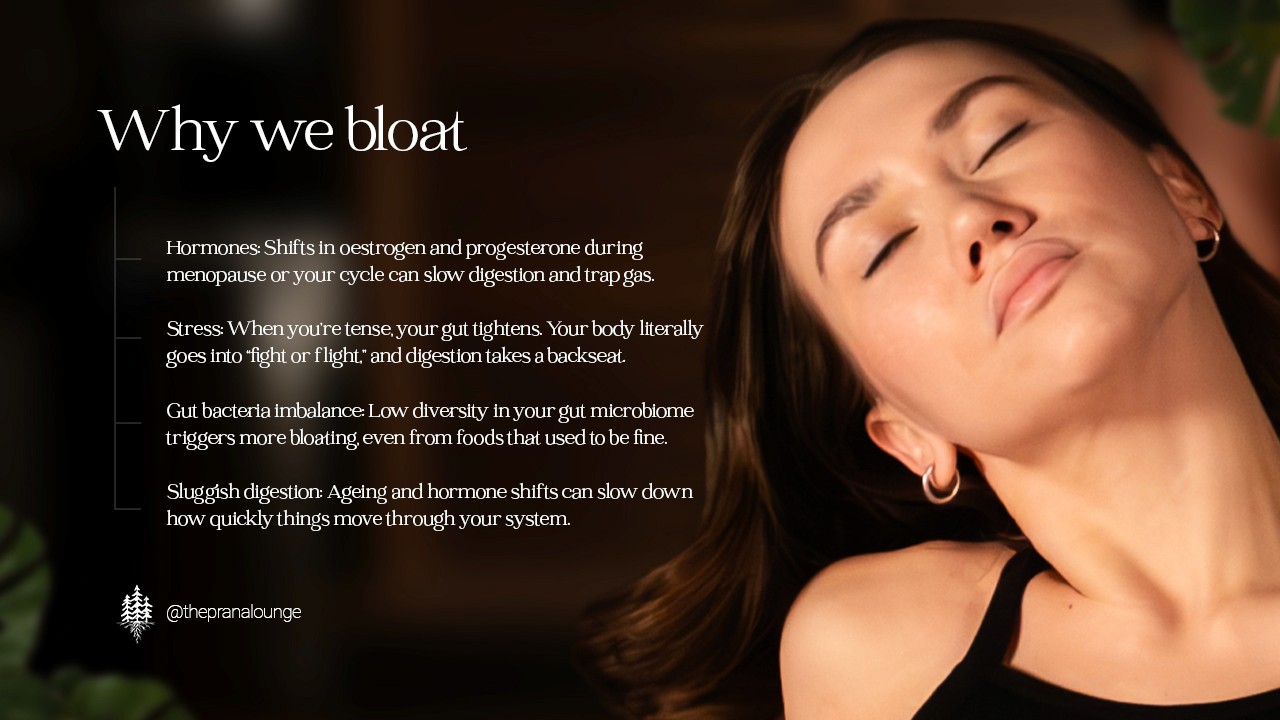
1. Hormonal shifts affect digestion
Hormones influence more than mood or energy.
They directly affect how your digestive system moves.
Fluctuations in oestrogen and progesterone, especially during the menstrual cycle or menopause, can slow gastrointestinal transit.
This means food and gas move more slowly through the system.
Research published in the World Journal of Gastroenterology shows that hormonal changes can alter gut motility and sensitivity, which contributes to bloating and discomfort.
So if bloating feels cyclical, it often is.
2. Stress changes how your gut behaves
This is the one most people underestimate.
When you are stressed, your body shifts into a fight or flight state.
Digestion is not a priority in that state.
Blood flow moves away from the gut. Muscles tighten. The digestive process slows down.
A review in Frontiers in Psychiatry explains how stress impacts gut function through the gut brain axis, increasing symptoms like bloating and discomfort.
So that tight feeling in your stomach is not just physical.
It is your nervous system staying switched on.
3. Gut bacteria imbalance
Your gut is home to trillions of bacteria.
When this system is balanced, digestion runs smoothly.
When diversity drops or certain bacteria overgrow, fermentation increases. This produces more gas.
Even foods that used to feel fine can suddenly cause discomfort.
Studies in Nature Reviews Gastroenterology & Hepatology show that changes in the gut microbiome are strongly linked to bloating and functional digestive issues.
This is why bloating is not always about what you eat.
It is about how your body processes it.
4. Slower digestion over time
Digestion is not static.
As we age, or as hormone levels shift, the speed of digestion can slow.
Food stays in the gut longer. Gas builds up more easily.
This leads to that familiar feeling of fullness or pressure.
Clinical observations referenced in American Journal of Gastroenterology highlight how slowed gut transit contributes to bloating, especially in adults experiencing hormonal or metabolic changes.
What Actually Helps Reduce Bloating
You do not need to overhaul everything.
Small, consistent adjustments make the biggest difference.
Support your nervous system
Take a few minutes to slow your breathing before meals
Avoid eating in a rushed or distracted state
Give your body a signal that it is safe to digest
Move your body gently
Light walking after meals supports digestion
Gentle yoga twists can help release gas and tension
Avoid staying seated for long periods after eating
Eat in a way your body can handle
Chew slowly
Notice which foods consistently trigger discomfort
Do not assume healthy foods will always feel good for you
Support gut health over time
Include a variety of whole foods to support microbial diversity
Stay hydrated
Avoid sudden, extreme dietary changes
Give your body time
Regular meal timing helps regulate digestion
Late night eating can slow the process further
Consistency matters more than perfection
What People Often Get Wrong
They try to fix bloating by removing more and more foods.
Sometimes that helps. Often it does not.
Because the issue is not always the food.
It is how the body is functioning at that moment.
If the nervous system is tense or digestion is slowed, even simple meals can feel heavy.
Bloating is not just discomfort.
It is feedback.
From your hormones.
From your nervous system.
From your gut.
When you start paying attention to those signals, the body becomes easier to understand.
And once you understand it, you stop working against it.